The final weeks of pregnancy can feel slow, emotional, and full of anticipation. Your nursery may be ready. Your hospital bag may be packed. But you might still be wondering:
When should I take a childbirth class? And do I really need one?
Whether you’re planning a hospital birth, home birth, or something in between, childbirth education can shape not just what you know…but how your birth feels.
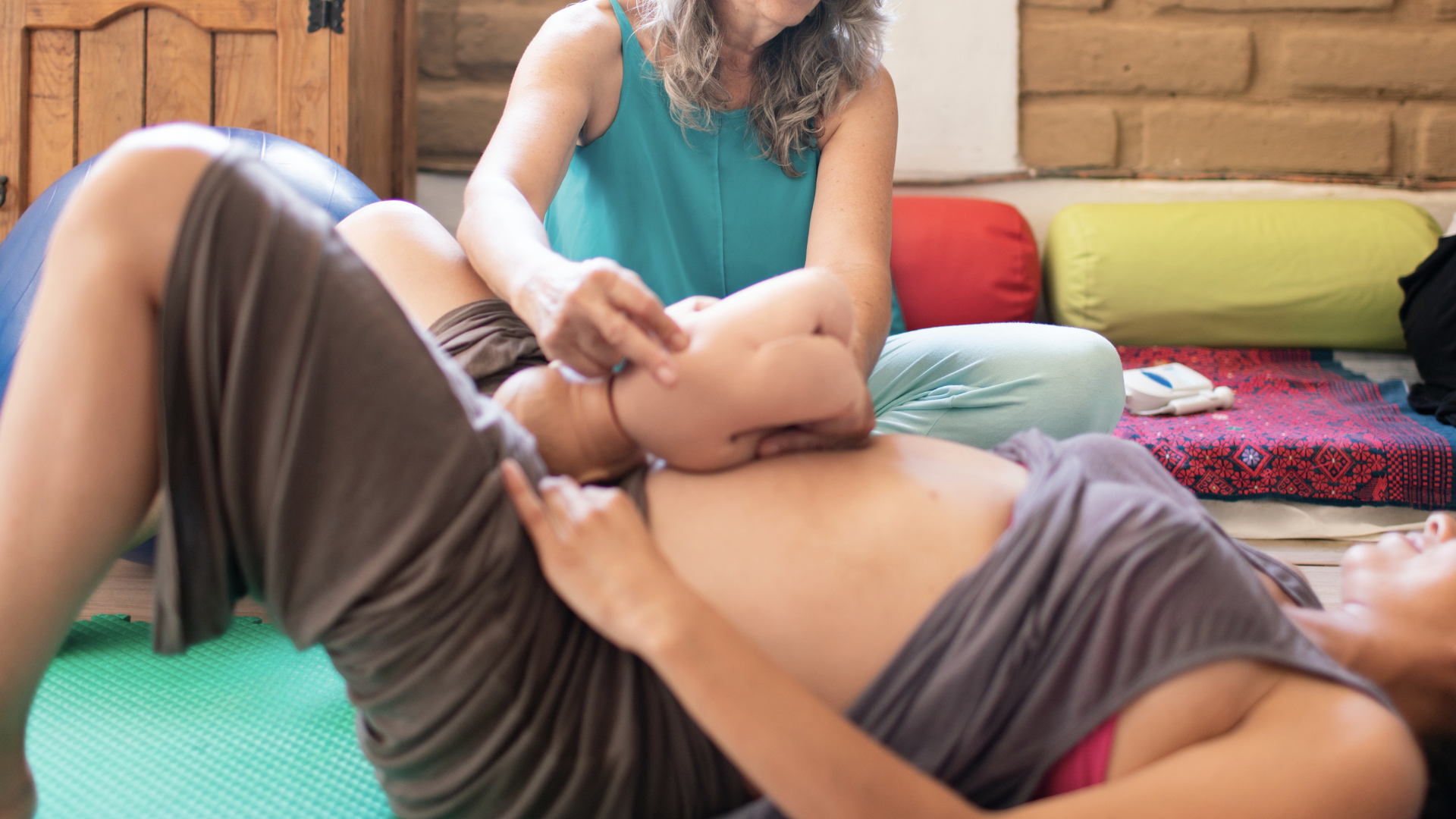
Childbirth educator describing the cardinal movements of birth
When Should You Take a Childbirth Education Class?
Most birth professionals recommend taking a childbirth education class during your early third trimester.
This timing allows the information to stay fresh and accessible when labor begins.
If you take a class too early in pregnancy, it’s common to forget some of the key details by the time you’re in the throes of labor. On the other hand, waiting too long can mean going into labor before you’ve had the chance to attend at all.
Taking a class in the early third trimester (between 28-36 weeks) offers a balance; you’re close enough to birth that the information feels relevant, but you still have time to ask questions, process what you’re learning, and prepare your environment.
What Is the Purpose of Childbirth Education Classes?
Childbirth education classes are designed to prepare you for the real, lived experience of labor and delivery.
These classes go beyond the basics. They help you understand:
What is happening in your body during labor
How labor typically progresses (and how it sometimes doesn’t)
What your options are depending on where and how you plan to give birth
How to respond to common decisions and unexpected changes
Birth is full of nuance. There are many pathways, many choices, and often moments that require decision-making in real time.
Seeking education from a trained birth professional helps ensure that you are not walking into those moments blindly.
Typically, you will be encouraged to attend your childbirth class with your partner or whoever will be supporting you during your birth. This shared understanding matters. When both of you are informed, you are better able to communicate, support one another, and make decisions together.
You might explore questions like:
How long should I labor at home?
What are my options for pain management?
How do I know when it’s time to push?
What do terms like effacement and dilation actually mean?
These are not small questions! And having answers can change how you experience your birth.
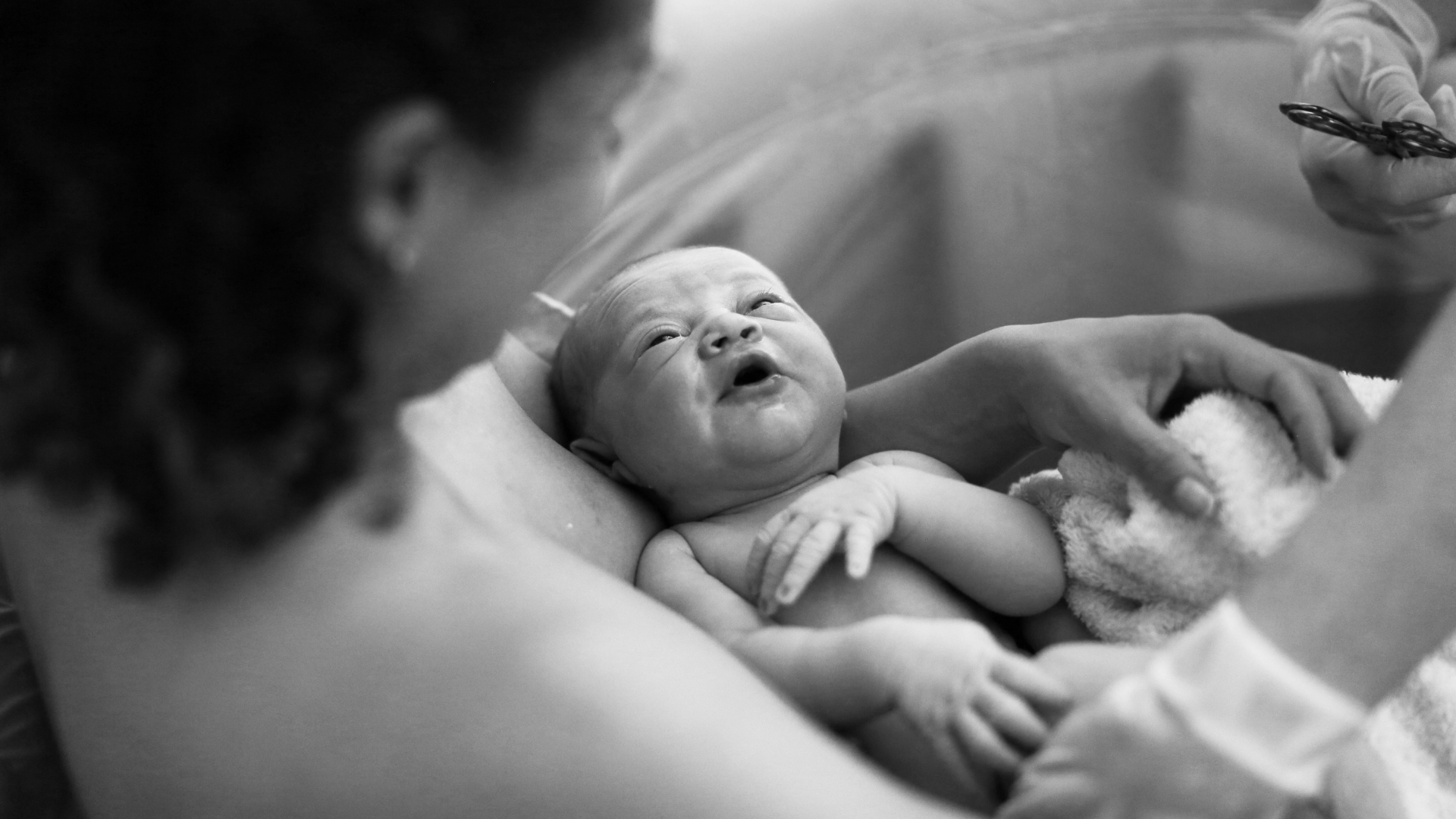
woman holding her newborn in birth tub
Are Childbirth Classes Necessary?
Your body will birth your baby whether you are prepared for it or not. Your baby will not stay in the womb forever.
So no, childbirth classes are not necessary in order to give birth.
But that’s not really the question most people are asking.
The deeper question is:
How do you want to experience your birth?
Do you want it to feel confusing? Overwhelming? Like something that is happening to you?
Or do you want to feel like you understand what’s happening… and that you are part of the process?
If this is your first birth, taking a childbirth class can be an invaluable way to prepare yourself and your support person. You’ll learn the stages of labor, what you may feel in each phase, and different ways to approach contractions and cope with intensity.
And even if this is not your first birth, there is still value in revisiting this information.
No two births are the same.
You may come into this experience with new preferences, new questions, or a desire to do something differently. A childbirth class gives you the space to explore that.
For example:
You may want to better understand a previous birth experience
You may want to prepare differently for postpartum
You may want to explore different pushing positions or comfort measures
Education gives you the opportunity to approach this birth intentionally.
Why Are Childbirth Classes Important?
Imagine this:
It’s the middle of the night. You wake up feeling something unfamiliar.
You think it might be a contraction… but you’re not sure.
Or imagine you’ve been laboring for hours, and your provider suggests breaking your water to speed things up.
What does that mean?
How is it done?
What are the benefits? The risks?
Do you have a choice?
These are incredibly common moments in birth.
And without education, they can feel overwhelming.
Being informed doesn’t eliminate uncertainty, but it gives you context!
When you understand your options, and the benefits, risks, and alternatives that come with them, you are more likely to:
Experience fewer unwanted interventions
Feel confident in your decisions
Walk away from your birth feeling informed and respected
A “positive birth outcome” is not just about a healthy parent and baby.
It’s also about how you felt in your body.
How you were spoken to.
Whether you felt like your voice mattered.

Leaning over a hospital bed in labor
Benefits of Taking a Childbirth Class
When you choose to educate yourself about birth, you become an active participant in your experience.
Many people, especially in highly medicalized birth environments, describe birth as something that happened to them.
Childbirth education can shift that.
Some of the benefits include:
Feeling more grounded and prepared during labor
Understanding what is happening in your body
Knowing your options and how to navigate them
Communicating more effectively with your birth team
Reducing fear through familiarity and understanding
There is also something powerful about learning in a group setting.
Conversation deepens understanding. Hearing other questions, perspectives, and experiences can expand your own knowledge in ways that reading a book or watching a video cannot.
While books and online resources are valuable, an interactive childbirth class allows you to ask questions, explore scenarios, and personalize your preparation.
What Classes Should You Take Before Having a Baby?
In addition to childbirth education, there are several other classes that can support your transition into parenthood:
Childbirth Education Class
Phases and stages of labor
Coping techniques
Decision-making frameworks
Breastfeeding Class
Milk production and supply
Feeding patterns
Positioning and latch
Infant Care Class
Sleeping, feeding, diapering, bathing
Newborn basics and expectations
Infant CPR/First Aid
Often taught through organizations like American Red Cross, these classes prepare you for emergency situations.
You may also choose more specialized classes, such as:
Lamaze
Hypnobirthing
These often focus on breathing techniques and coping strategies during labor, but they are not limited to unmedicated births!

Newborn first latch
The Bottom Line
Taking a childbirth class in your early third trimester is one of the most impactful ways to prepare for birth.
Not because birth requires perfection.
But because understanding what’s happening allows you to stay grounded within it.
You don’t need to know everything.
But having a foundation…something to return to when things feel intense, unfamiliar, or uncertain…can change everything about how your birth experience feels.
And that matters.
